Founders are some of the smartest people I’ve ever worked with. They identified a real problem, built a solution, and convinced people to fund it. That combination of vision and stubbornness is genuinely rare.
That same stubbornness is exactly what gets them in trouble when it comes to go-to-market.
Most founders sell the product themselves early on, which makes complete sense. Nobody knows it better. They pick up some customers, get referrals, maybe bring in a sales rep. Revenue comes in and the assumption is that the model is working. What they’ve actually built is a referral business with some accidental sales on top of it. That’s not a revenue engine. That’s a network with a product attached.
Eventually they decide it’s time for marketing. But by then the budget is tight, the board wants growth, and the instinct is to hire someone junior who can execute tasks rather than someone senior enough to build the system. A campaign manager instead of a strategist. Someone to run ads instead of someone to figure out who the ads should be talking to and why.
Marketing is almost always an afterthought. By the time it gets attention, the company is already behind.
The result is usually a newsletter nobody asked for, sales pitch emails that get deleted on sight, and a website that describes what the product does without explaining why anyone should care. No real ICP. No personas. No messaging designed for the actual buyer.
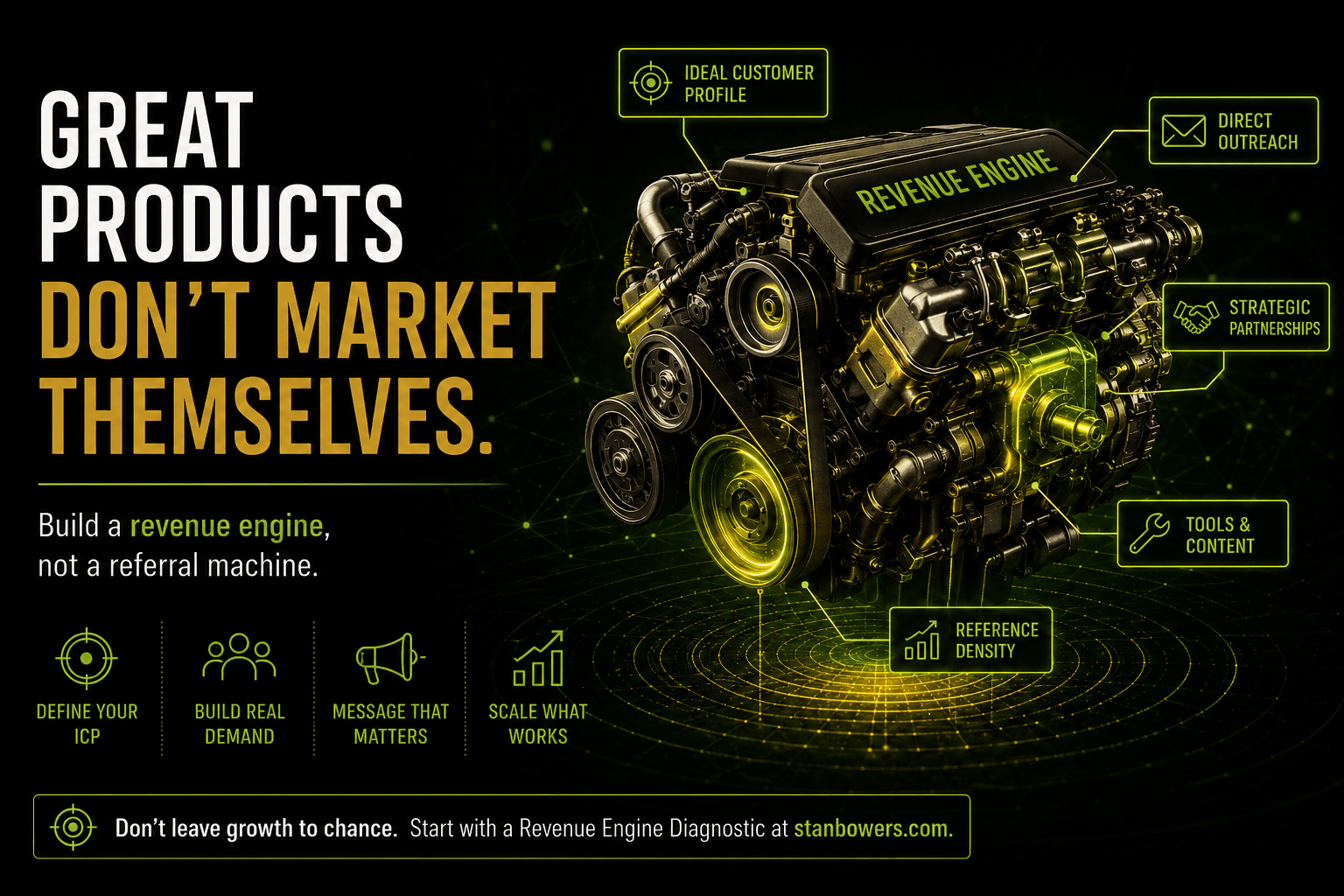
You wouldn’t let someone who has never touched an engine rebuild yours. And you probably wouldn’t try to rebuild it yourself. So why treat your revenue engine any differently?
Great products don’t market themselves. And the cost of figuring that out late is almost always higher than the cost of getting it right early.
If this sounds familiar, start with a Revenue Engine Diagnostic at stanbowers.com.
 stanbowers.com